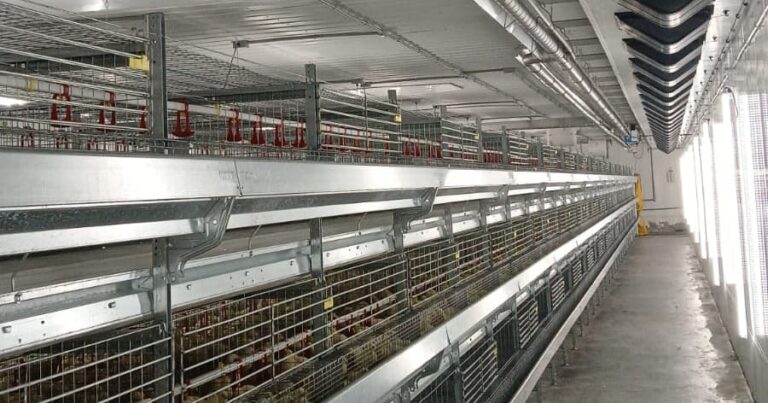
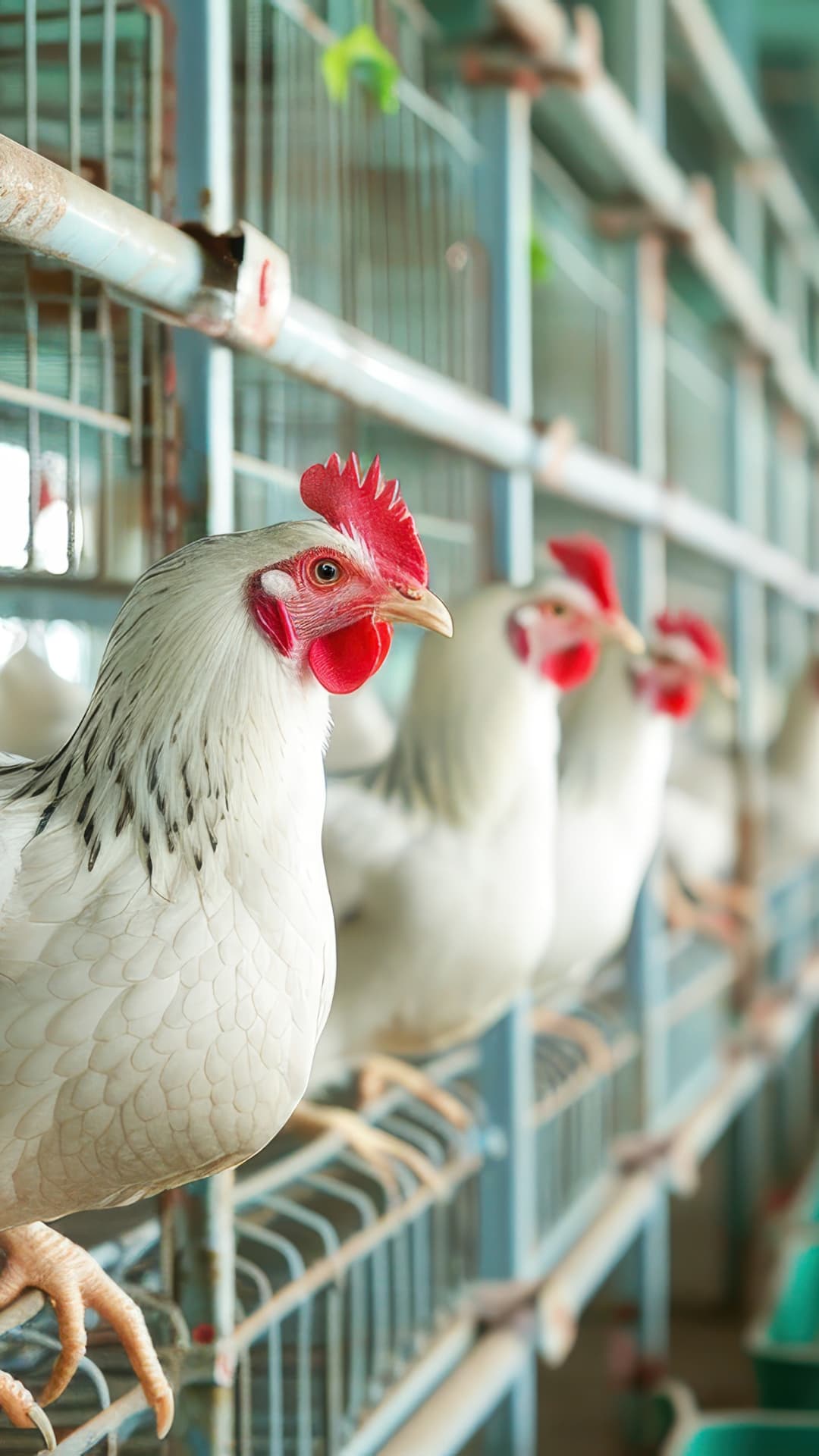
When the mass is warm, everything else follows. Reflect-O-Ray heats the floor, walls, bedding, and structure directly — creating a steady brooding environment — drier litter, calmer birds, and results you can actually see in the barn.
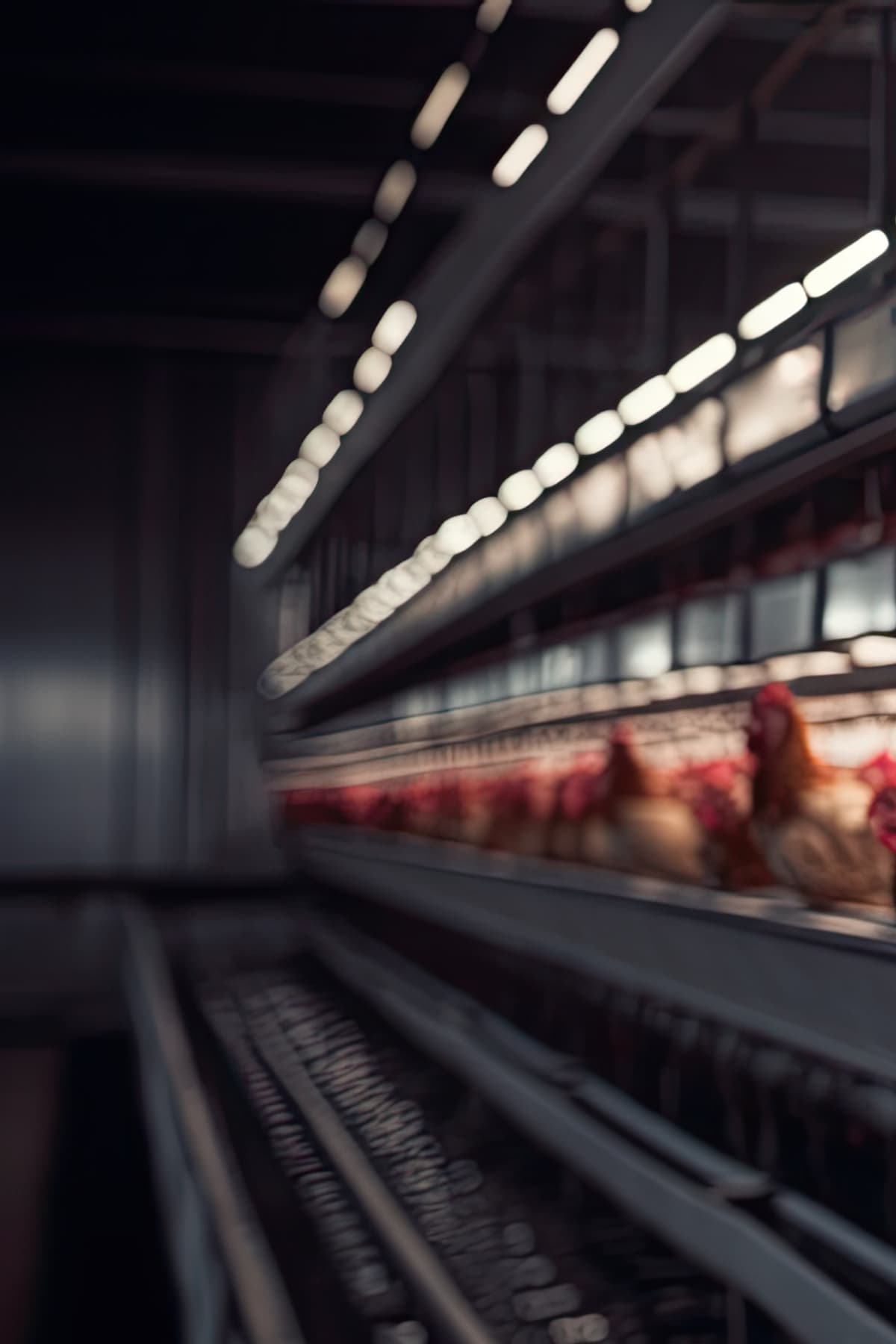
Measured Results — Western Canadian & Montana Poultry Barns
When you control the environment, everything changes — mortality, litter, fuel bills, and flock uniformity.
Viking Colony — 7 Barns, All Switched
"The gas company called to ask if we dug our own well."
Josh didn't trial one barn. After visiting other operations, reviewing the physics, and doing their homework, Viking Colony upgraded all seven at once. What they found on the other side is what Josh calls heavenly heat — birds spread wall to wall, litter dry, gas bills unrecognizable.
Hot water systems and forced-air heaters warm the air — but air doesn't hold heat. It rises, it drifts, it escapes through ventilation. Meanwhile, the floors are cold, the walls are cold, the cages are cold. And every one of those cold surfaces is stealing heat from your chicks.
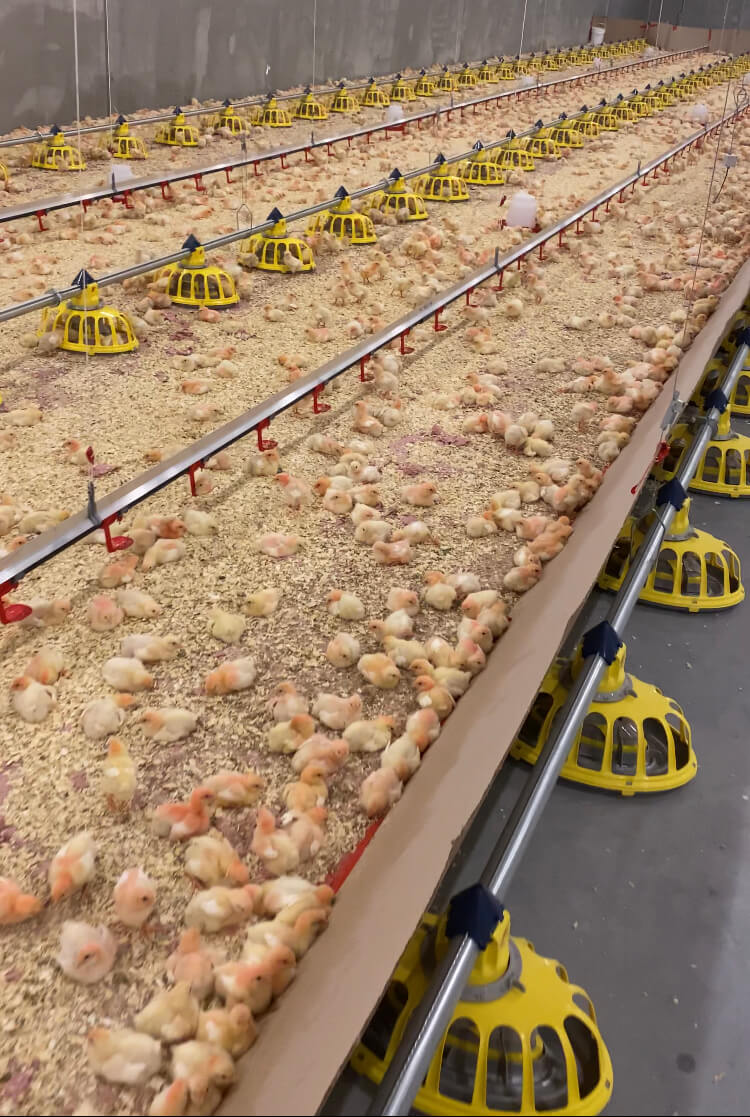
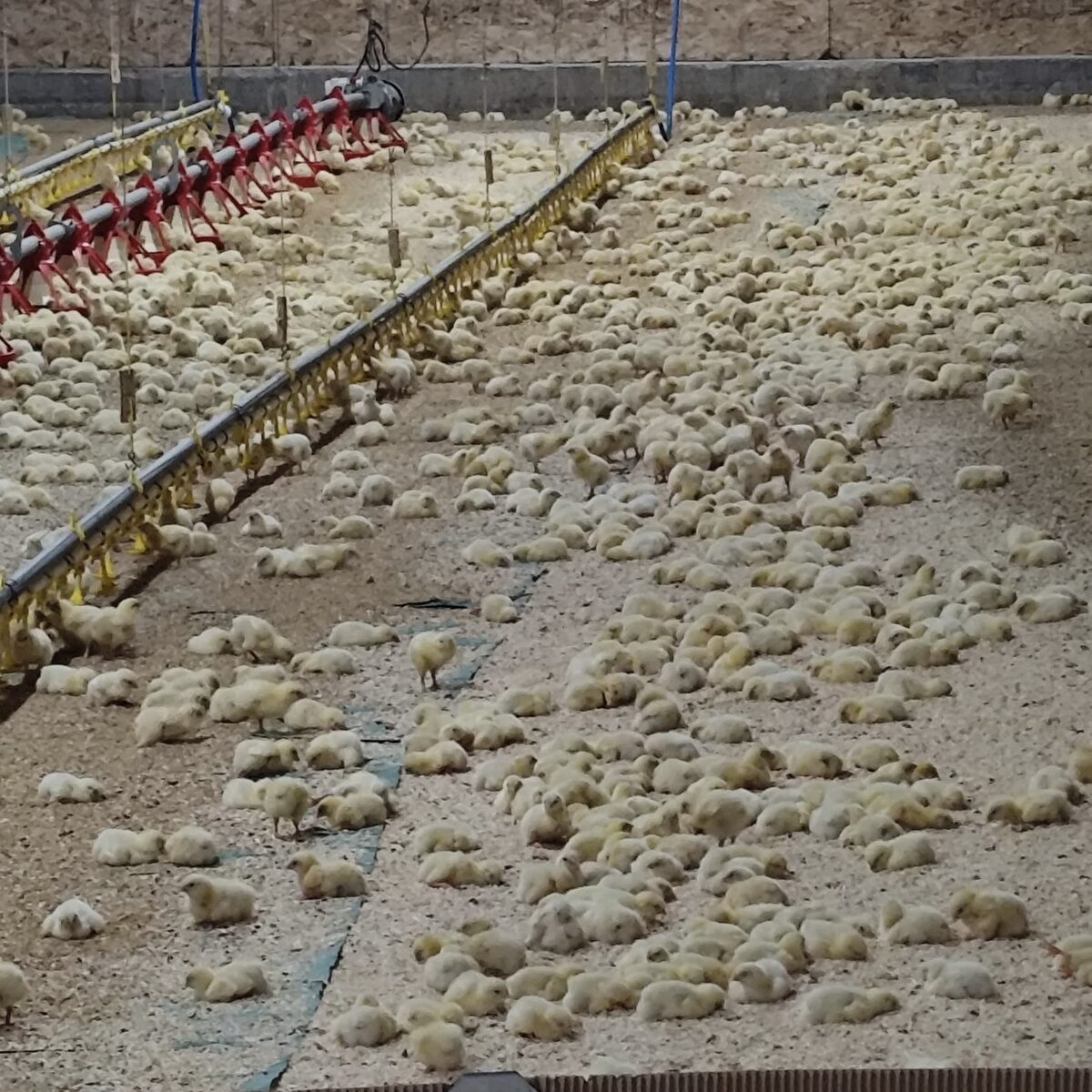
At Viking Colony — seven barns, hot water heat — chicks piled into the four corners and along the walls during brooding, leaving the entire center empty. Not because the corners were ideal. Because they were the least cold, least drafty option available.
Hot water heat warms the air. To move that warm air down to floor level, you have to run fans. But for a day-old chick, a warm draft might as well be a cold draft. Corners offer shelter, trapped air, and the chance to pile together for body heat.
Those chicks aren't comfortable. They're just surviving.
Most producers know their barn has uneven heat. What's less understood is why — and why some systems make it worse no matter how high you turn them up.
Air doesn’t hold heat. It moves it — and then it’s gone. It's too low-density to hold energy. The moment ventilation runs — and it always runs — warm air is replaced by cold air. Any heat stored in the air column is gone. You're paying to heat air that leaves the building continuously.
Warm air rises to the ceiling. In a large barn, heated air expands, becomes lighter, and stratifies. The floor level — where chicks actually live — stays coldest. Hot water fin tubes mounted overhead make this worse: you can have 80°F at the ceiling and 60°F at chick level at the same time.
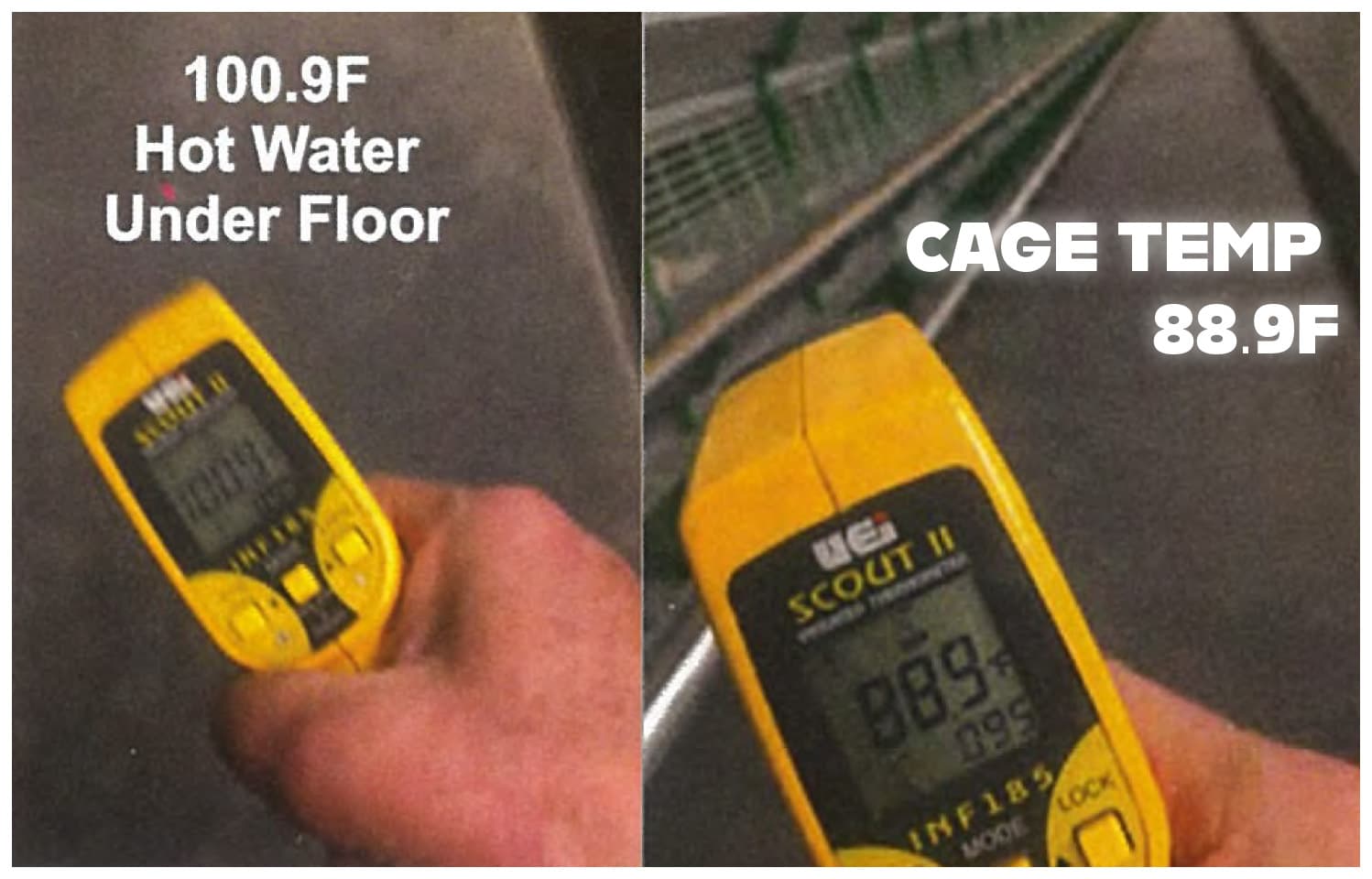
Cold surfaces steal heat from everything nearby. A laying barn with 100.9°F underfloor temperatures measured only 88.9°F at cage level and 78.2°F at the pony wall — even though the floor was hot. Cold walls, cold cages, cold structure: they don't just resist warmth, they pull it away from the birds through thermal equilibrium — meaning the cold surfaces pull heat until everything evens out.
Reflect-O-Ray breaks this cycle. Infrared energy heats solid surfaces directly — the bedding, the floor, the walls, the structure, the birds themselves. When the mass of the barn is warm, it becomes the heat source. Warm surfaces re-radiate heat continuously — even when the system cycles off. The barn becomes the heater.
The floors are cold. The walls are cold. The cages are cold. Every surface at bird level is acting as a heat sink — pulling warmth out of the chicks, out of the bedding, out of the entire barn.
You can warm the air column all you want. But until the mass of the barn is warm — the floors, the walls, the structure itself — you're running an expensive, fragile system that evaporates the moment the burner shuts off.
Heating the air is half the battle. Heating the mass is how you win it.
In poultry barns, your exhaust fan housings show you exactly what's happening inside. On a subzero day, the difference between a hot water barn and a Reflect-O-Ray barn — you can see it immediately.
The first week of a chick's life is when it forms skeletal structure, grows internal organs, and builds immune strength. If temperatures fluctuate or air movement creates drafts, even good birds fall behind — and the ones that survive never fully recover.
In floor-based broiler barns, air movement is the enemy during brooding. Traditional systems — especially hot water pipes mounted along ceilings or walls — heat the air first. But warm air rises. To push that heat down to chick level, fans have to run early.
Those fans aren’t helping the birds — they’re compensating for a system that can’t deliver heat where it’s needed. For a day-old chick, even a “warm” air current across the floor acts like a draft, driving cold stress, crowding, and early losses.
Reflect-O-Ray heats the mass, not the air. Bedding stays dry on its own. Litter dries before it can wet. That means you can run the barn without cold outside air for the first 6–10 days — exactly the window when drafts cause the most damage.
The industry has normalized 4–5% early mortality. That number was built on outdated, drafty systems with poor heat distribution. It's not inevitable — it's the cost of poor heat disguised as tradition.
Chick mortality isn't a cost of doing business. It's often the cost of poor heat.
Across barns running Reflect-O-Ray, producers routinely report death loss in the 1–2% range — sometimes lower. Every chick that survives the first week grows into a profitable bird.
Prairie weather doesn’t give you much warning. A mild afternoon becomes −35°C overnight. How your barn responds to that in the first 20 minutes matters as much as what it does the rest of the day.
Reflect-O-Ray's 22-gauge aluminized spiral tubing reaches full radiant output in 3–6 minutes — compared to 13–16 minutes for standard 16-gauge black metal tubing. When a cold front hits, the barn starts responding immediately. No thermal lag, no pre-heating, no babysitting.
Infrared energy deposits into the barn's physical mass — concrete floors, walls, steel, cages, bedding. These surfaces absorb heat and slowly re-radiate it back. When the system cycles off, the barn doesn't go cold. The building itself keeps radiating warmth until the next cycle.
Reflect-O-Ray's vacuum-vented system pulls combustion evenly through the full tube run. Combined with front-end thermal control tubes that prevent hot-spots at the burner, the result is a consistent radiant signature across the entire barn — ~0.5–1°F differential from end to end.
In a Reflect-O-Ray barn, warm surfaces mean incoming ventilation air immediately passes over warm mass rather than cold structure. This dramatically reduces temperature shock. The system and the ventilation work together — instead of the ventilation undoing everything the heating accomplished.
Your thermostat reads the air. Your birds feel everything else — the cage steel around them, the wall beside them, and the surfaces that shape the barn environment. In most barns those surfaces run 10–20°C colder than the air setpoint, pulling warmth away from the birds constantly. Reflect-O-Ray changes what gets heated.
In a barn heated by hot water or forced-air, the thermostat setpoint is essentially a fiction — it measures one point in the air column and tells you very little about what the birds are actually experiencing. Cage steel stays cold. Walls stay cold. Barn surfaces stay cold. Those surfaces are actively drawing warmth out of the birds and the bedding through thermal equilibrium.
Reflect-O-Ray changes what gets heated. Infrared energy deposits directly into solid mass — steel, wood, wall panels, structural surfaces, and birds — bringing every surface in the barn in line with the air setpoint. When all surfaces are warm, there is nowhere for heat or moisture to hide. You don’t get a cold ceiling pulling condensation, or warm air rising and falling back as dampness. The entire barn stabilizes as one system.
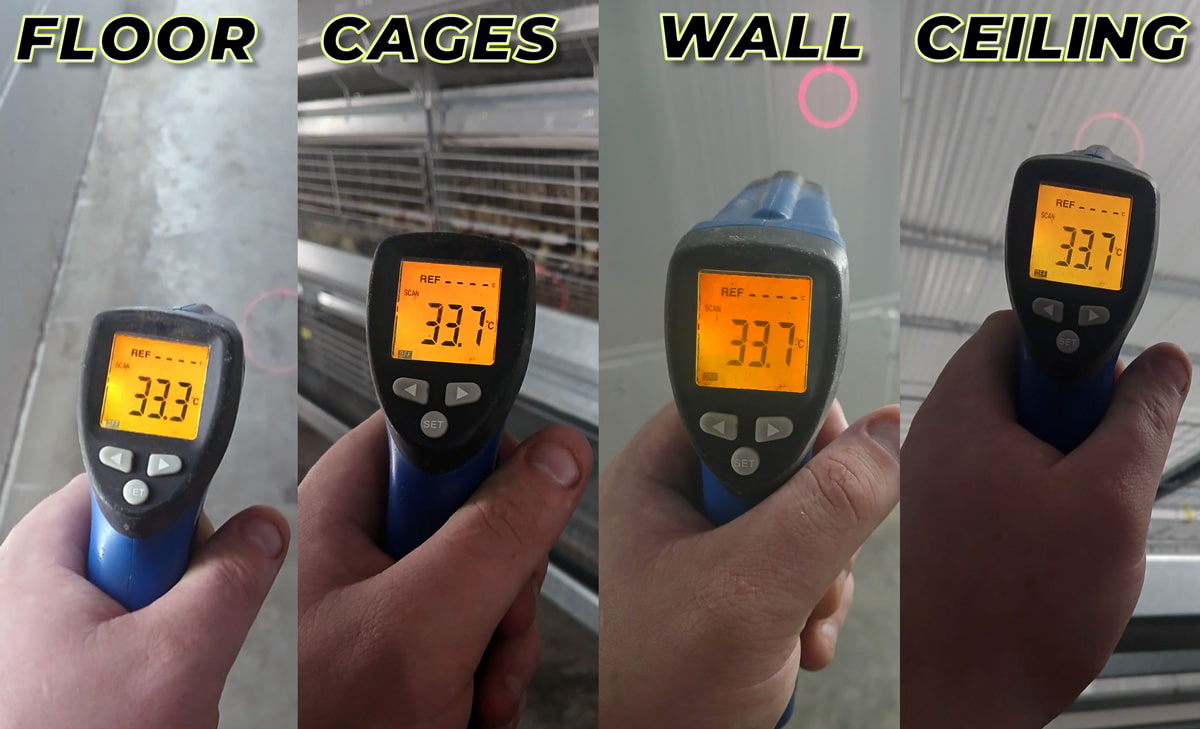
The Spring Point readings show what that looks like in practice: cage, wall, and ceiling surfaces all sitting within 0.4°C of the thermostat setpoint. Not one warm zone in a cold barn — an even thermal envelope from top to bottom. When every surface matches, you don’t get moisture cycling through the barn. That’s what "everything heating" means.
Field Check — Surface Temps vs. Setpoint
Watch Viking Colony's full transformation — seven aging barns, failing hot water heat, and what happened after switching every single one to Reflect-O-Ray.
Viking Colony operates seven barns of different ages, insulation levels, and layouts. Their aging hot water system ran constantly just to keep up — and still produced cold floors, damp litter, frosted interior walls, and icicles on the exterior fan housings on cold days.
When their boiler began failing, they explored alternatives. We offered the option to trial a single barn. But Viking did their homework — they visited other operations, reviewed performance data, and looked into how Reflect-O-Ray actually works. Their conclusion?
Instead of trialing one barn, they upgraded all 7.
"The soft, low-intensity infrared settles over the barn like a gentle sunrise — steady, balanced, and warm exactly where the birds need it."
Josh — Viking Colony
After seeing the even heat, calm birds, and dry floors across all seven barns, Josh started calling it "heavenly heat."
📋 March 2026 Update — Josh, Viking Colony
32 birds lost from a 2,700-bird flock after the first two weeks.
That's 1.2% death loss — in the window when most operations see their highest numbers. Viking retrofitted mid-2025. This is what the second season looks like when the barn mass is warm from day one.
Photos courtesy of Viking Colony. More being added shortly.
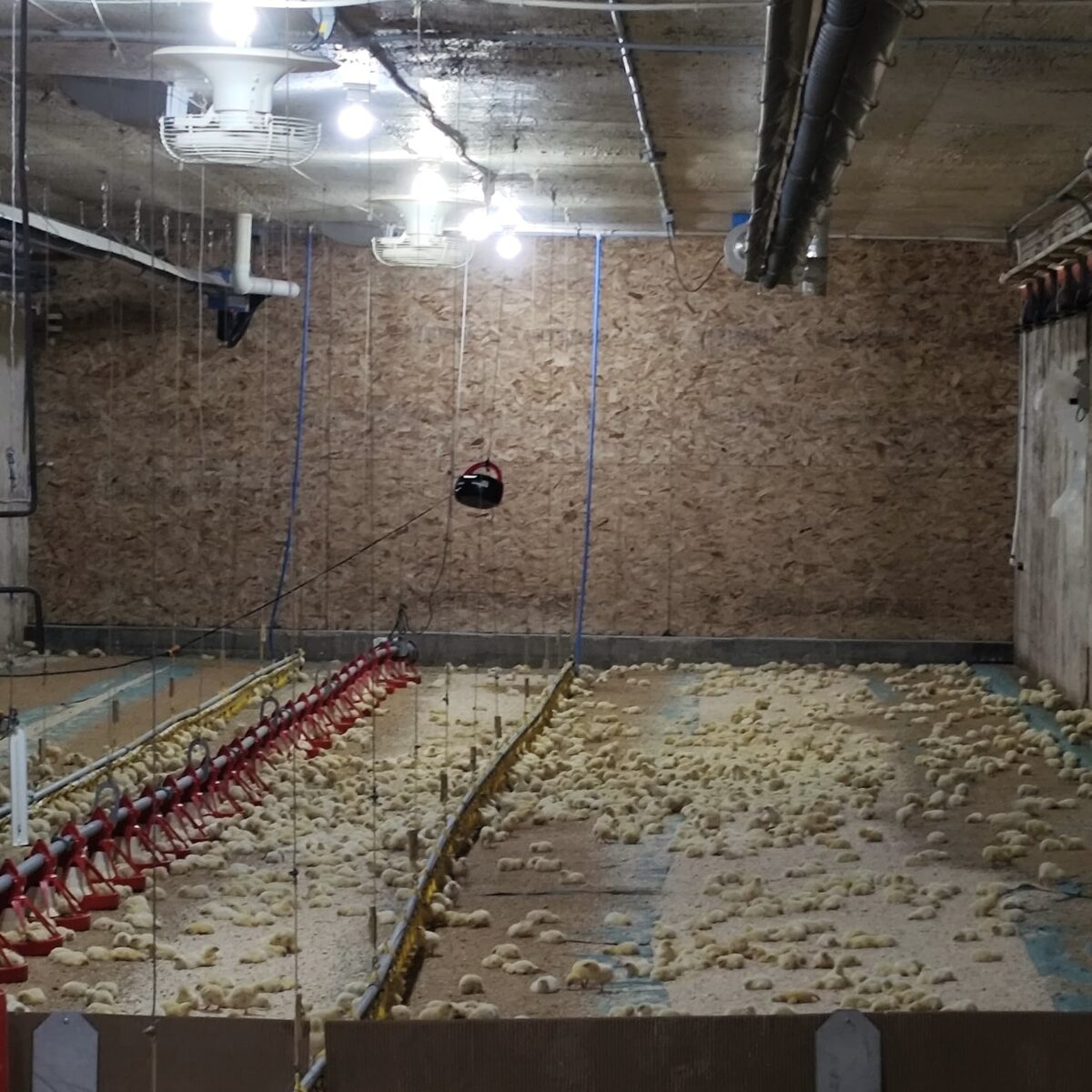
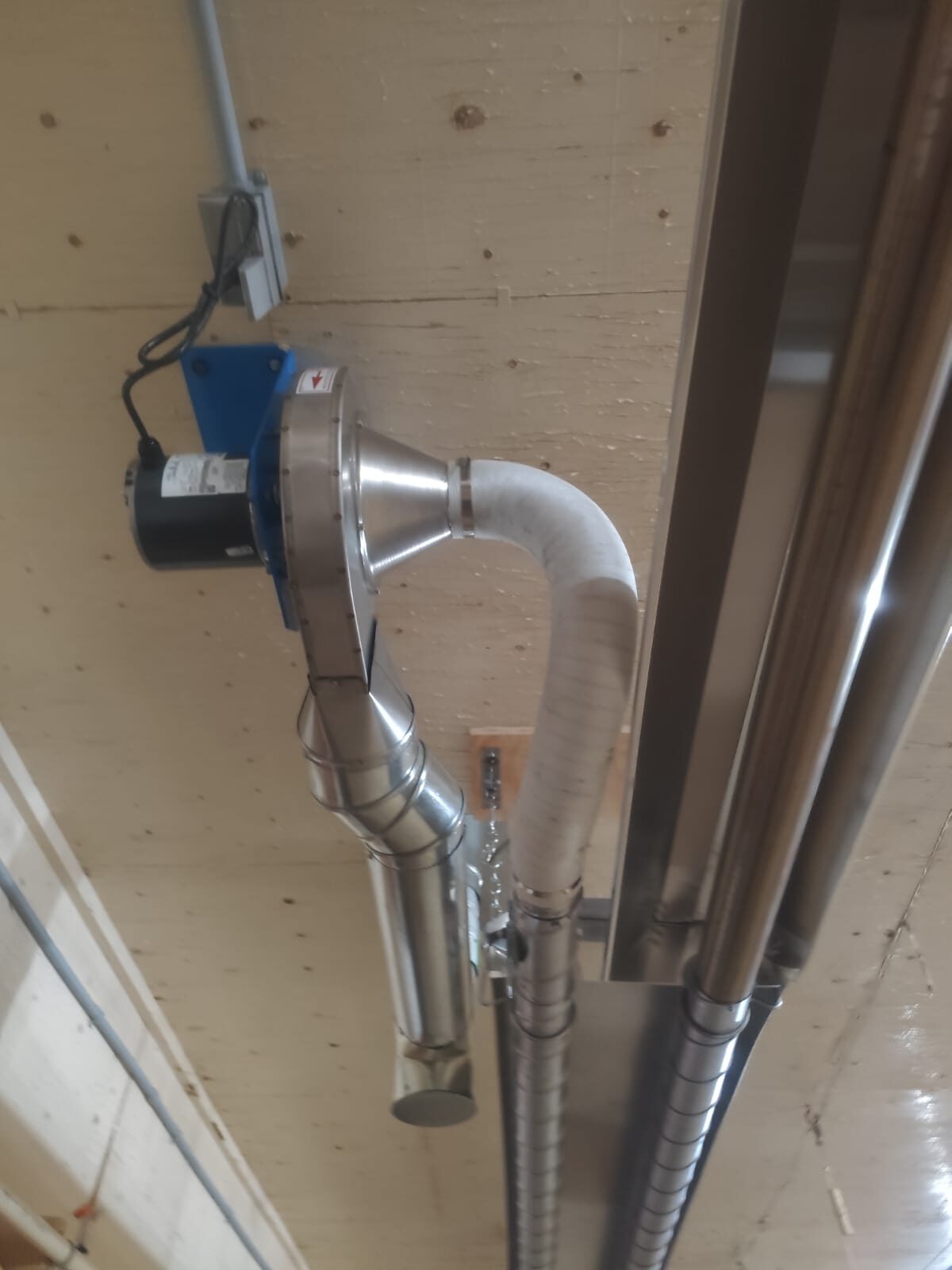
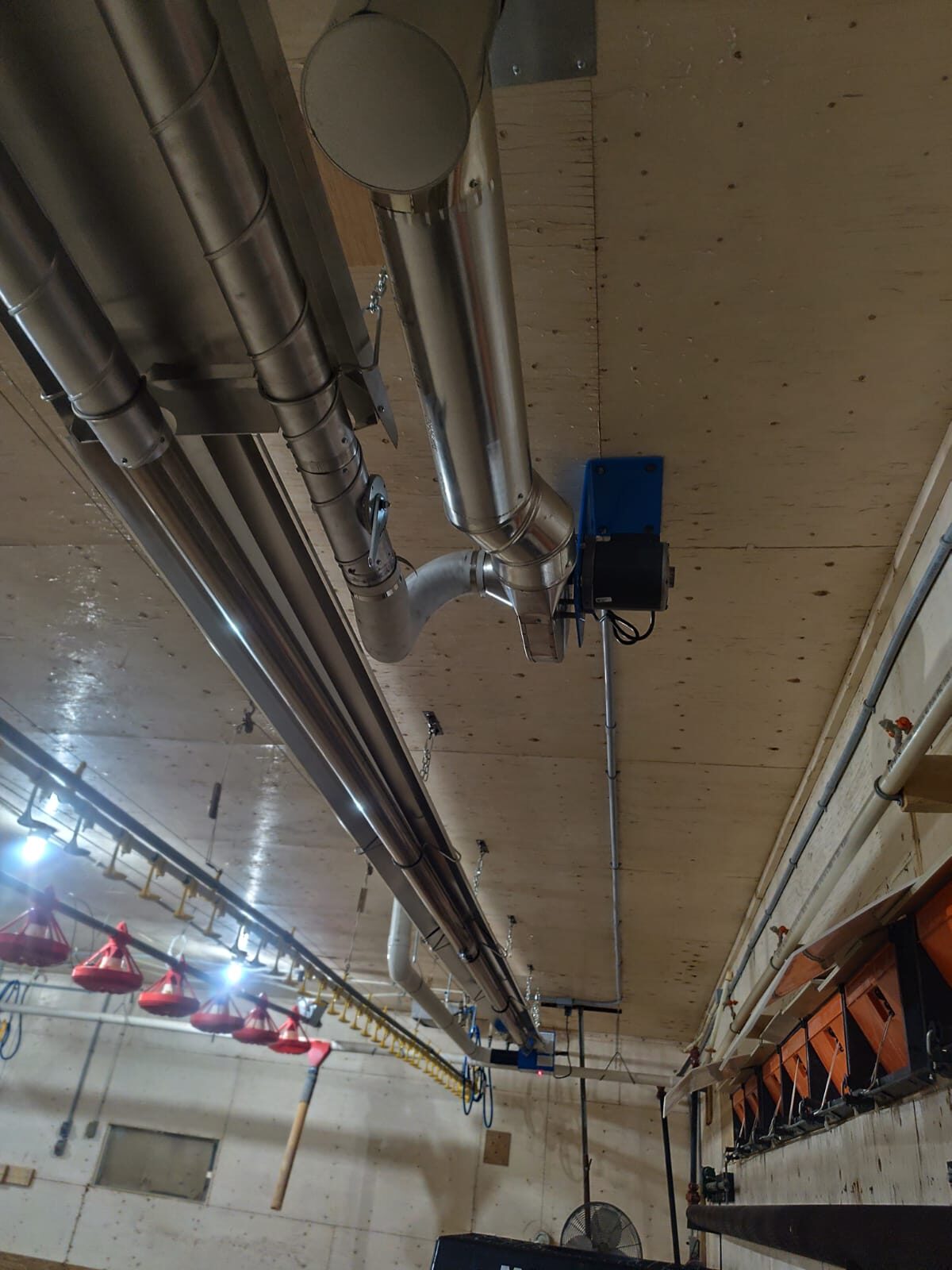
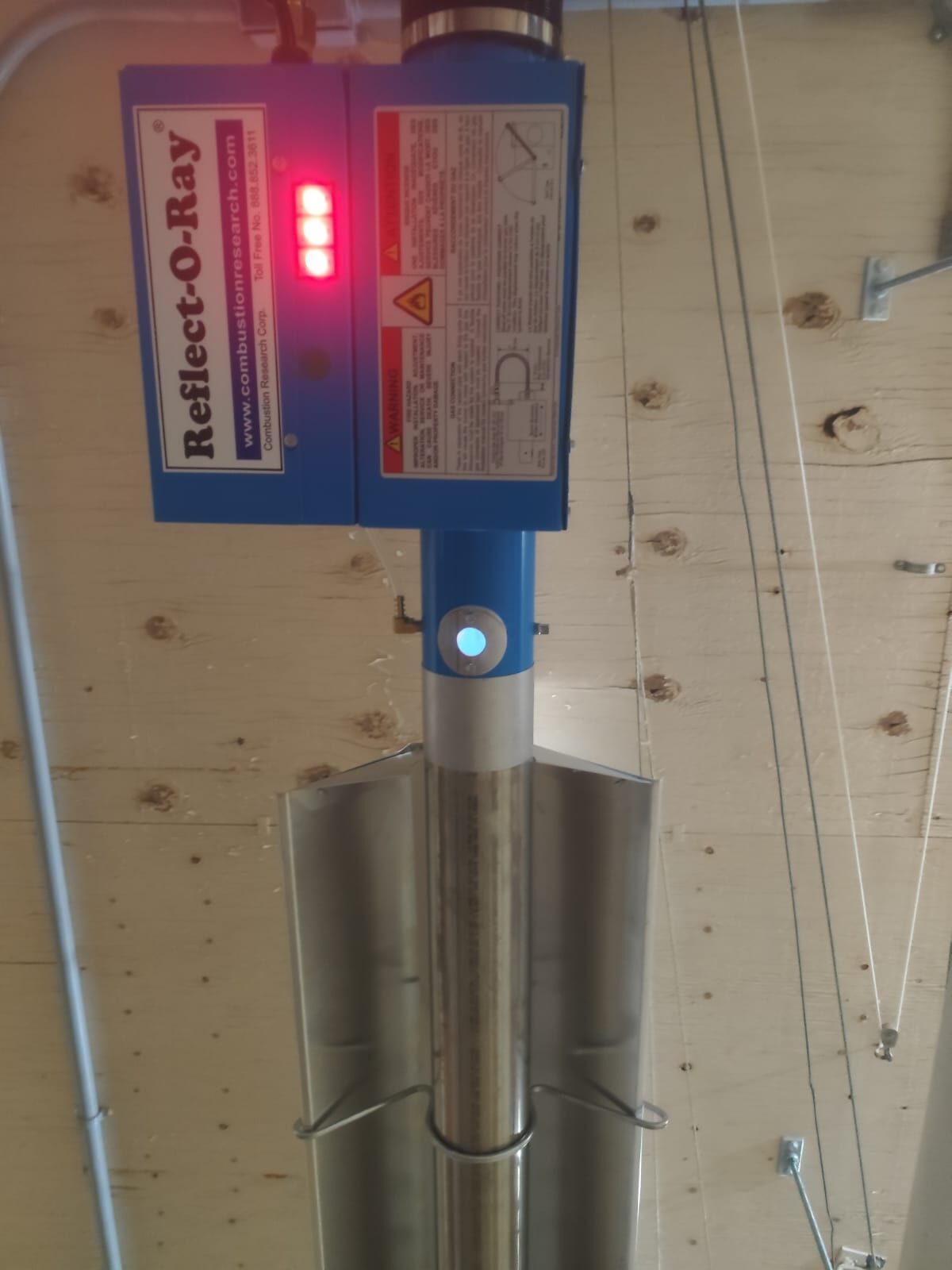
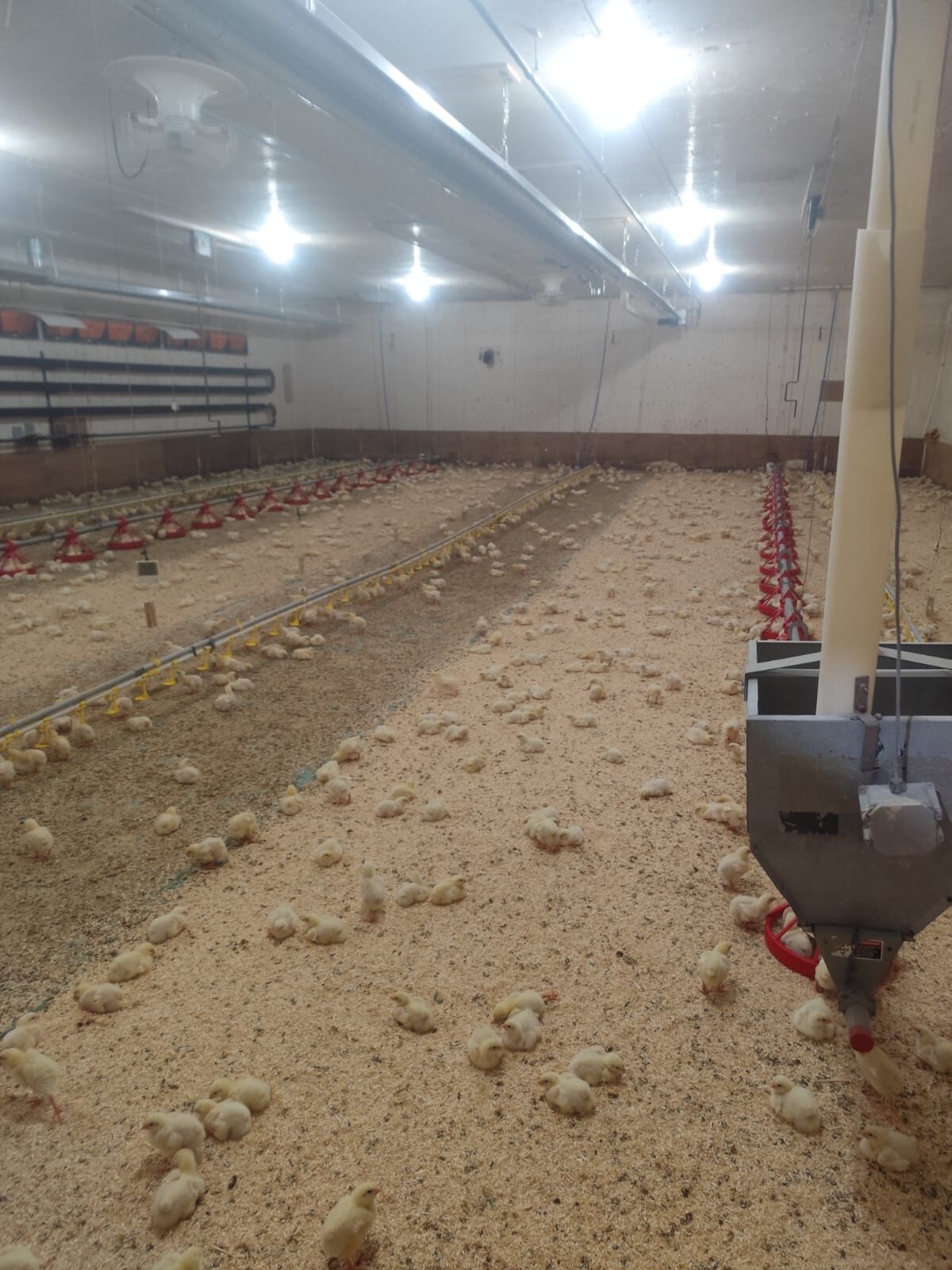
About four years ago, Oaklane Colony inherited a barn in Coaldale with their quota purchase — equipped with two heating systems: unit heaters for chicks and hot water fin tubes for broilers. That gave them a rare chance to see both systems side-by-side in the same environment.
They recorded 5–8°F temperature swings across the barn. More importantly, they took rectal temperature readings on the birds. Birds on the forced-air side were colder, more stressed, and less uniform — even when room temperatures seemed close. The chicks simply weren't absorbing the heat the same way.
When it came time to build their new 40,000-bird barn at Fairfield — tied to their quota move — they didn’t have to guess.
They saw Reflect-O-Ray at Rosebank on a −50°F day — holding a 0.5–1°F temperature differential with steady heat and even birds — and made the call.
Fairfield went Reflect-O-Ray.
Future builds at Oaklane are already being planned the same way.
Want to hear it straight from the source? These producers have offered to talk with anyone considering the switch.
Sanitation depends on more than detergents — it depends on how fast the building dries after washing. Reflect-O-Ray shortens that window dramatically.
Whether you're replacing a failing system, designing a new facility, or just tired of losing birds to a barn environment you can't control — we start with a conversation. No pressure. Just a straight look at your barn and what would actually change.
Serving Western Canadian and Montana poultry producers — broilers, breeders, layers, and turkeys.